The Bad Signature: A Typeface for Making Your Products Stand Out
I was sitting at my desk, the smell of fresh beeswax candles cooling nearby, staring at a blank label design on my screen. The candles themselves were perfect—small, handmade jars with a subtle honey scent. But their presentation felt generic. I needed a touch of elegance, a personal signature, something that felt crafted and not just printed. That’s when I found The Bad Signature.
The Character of a Crafted Font
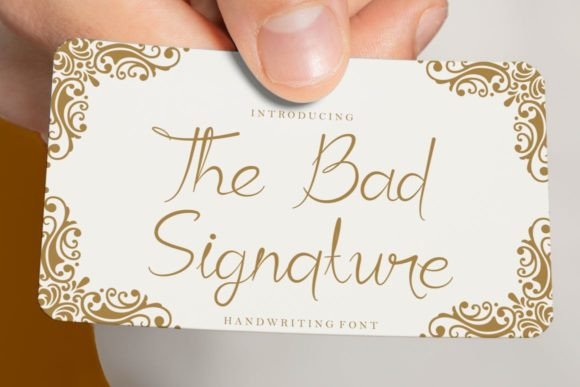
The Bad Signature isn’t just another script font. It’s a dazzling, highly detailed typeface with a personality that feels both confident and charming. Its strokes are neat yet fluid, carrying a sense of deliberate artistry. This isn’t a frantic, chaotic handwriting; it’s a considered and elegant script. The overall mood is one of premium quality and creative care—exactly the impression I want my handmade products to convey.
It has that beautiful, slightly editorial feel, reminiscent of a carefully penned note or a stylish brand logo. For any maker, seller, or printable creator, this font becomes more than a tool; it’s a design asset that elevates the ordinary into something special.
Bringing a Font to Life on Real Products
My first test was on those candle labels. I typed the candle’s name, “Honey & Oat,” using The Bad Signature. Instantly, the product felt more cohesive and luxurious. The font’s detailed characters gave the label a focal point, making the simple jar look thoughtfully designed. From that moment, I started seeing its potential everywhere in my shop.
Where The Bad Signature Shines
This font is incredibly versatile for physical and digital creations. Its strength lies in display use—short phrases, names, and titles that need to command attention and evoke feeling.
- Labels & Packaging: For candle labels, perfume bottles, spice jars, or boutique packaging tags. It turns a simple product name into a brand statement.
- Stationery & Invitations: Wedding invitations, save-the-dates, and greeting cards gain an instant touch of elegance. Using it for the couple’s names or a key phrase like “Celebrate With Us” creates a beautiful hierarchy.
- Wall Art & Printables: In printable wall art quotes or planner page headers, it adds a handmade, artistic touch that clean sans-serif fonts can’t provide.
- Signs & Welcome Boards: For a wedding welcome sign, a farmhouse-style kitchen quote, or a seasonal market booth sign, it provides that perfect, readable yet decorative script.
- Merchandise & Apparel: On tote bags, mugs, or T-shirts, a short phrase like “Morning Coffee” or “Book Lover” styled with The Bad Signature feels personal and designed, not just stamped.
- Digital & Social Graphics: For digital download preview images, listing photos on Etsy, or social media banners, it helps your brand look consistent and polished across all platforms.
The Practical Side: Readability and Pairing
Because The Bad Signature is so detailed, it’s best used for medium to larger sizes. On very small stickers or tiny product tags, some of its finer details might become less distinct, so testing your specific print or cut is key. For my candle labels, which are about two inches wide, it was perfectly crisp.
When using it in designs that require longer body text, like invitation details or product descriptions, pairing it with a clean, simple font is essential. A minimalist sans-serif or a classic serif font for the supporting text creates a perfect balance. This lets the script shine as the decorative element while ensuring all information is easily readable. This pairing strategy is crucial for things like wedding stationery suites or product packaging with multiple lines of text.
Building a Cohesive Brand Feel
Using a font like The Bad Signature consistently across your product line does something powerful: it builds brand recognition. When customers see your candle labels, your greeting cards, and your social media graphics all featuring that same elegant script, they begin to associate that style with your shop’s quality and aesthetic. It creates an emotional appeal, suggesting care, creativity, and attention to detail. This perceived quality can be a subtle but significant factor for handmade businesses and printable shops.
Essential Considerations for Makers
Before using any font for physical products or digital downloads you intend to sell, it’s vital to check its licensing. For The Bad Signature, ensure you have a commercial license that covers your use—whether it’s for selling stickers, printed invitations, or SVG files for cutting machines like Cricut or Silhouette.
Also, explore the font’s included features. Many premium script fonts like this offer alternates, ligatures, or swashes. These allow you to customize how certain letters connect, giving you even more control to create a unique look for a specific project, like a monogram on a wedding welcome board or a stylized logo for your shop.
Checking the supported file formats and multilingual support is also prudent, especially if your designs might include special characters or need to be used across different software and machines.
A Natural Part of the Creative Process
Now, when I design a new seasonal item—like a set of autumn leaf greeting cards or holiday gift tags—The Bad Signature is often my first choice for the main decorative text. It has become a natural part of my creative process. Designing a mockup for a printable wall art piece, I’ll type the quote with this font first to see how it frames the emotion of the words. Preparing a batch of boutique-style soap wrappers, I use it for the product name to instantly convey a sense of luxury.
For crafters, makers, and sellers, our tools matter. They shape not just the product, but the story it tells. A font like The Bad Signature, with its dazzling detail and crafted personality, becomes more than a typeface; it’s a collaborator in making your work stand out with grace and intention.